Why CIS Countries Should Welcome the Activation of the Southern Corridor of the Belt and Road Initiative
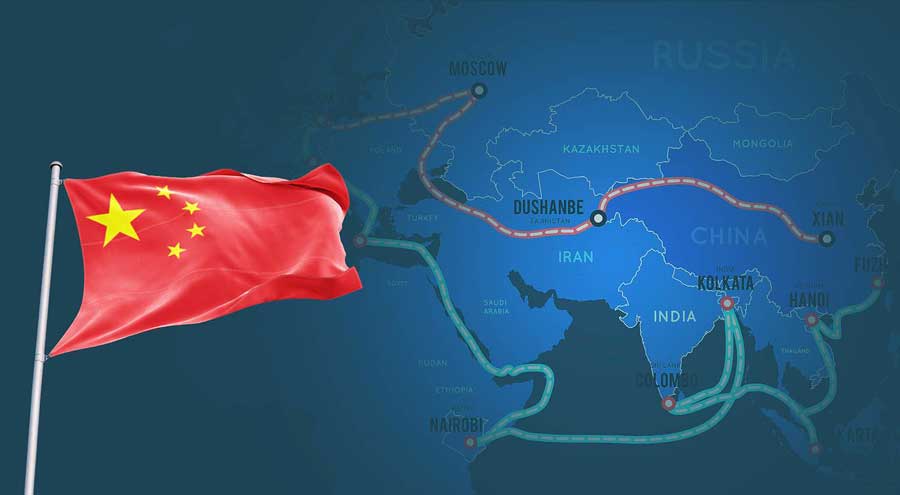
The proposal to activate the southern branch of China’s Belt and Road Initiative (BRI), raised by Dr. Jabbar Ali Zakeri, Deputy Minister of Roads and Urban Development and CEO of the Islamic Republic of Iran Railways, during the opening session of the ۷th Silk Road Transport and Logistics Forum in Almaty, Kazakhstan, has sparked an important question: Why should CIS countries already engaged in the Middle Corridor support the launch of a southern route crossing Iran?
In international relations, a fundamental principle guides decision-making: national interests. For multinational projects like the BRI, the alignment of interests among multiple stakeholders is even more critical. If the activation of one corridor diminishes the interests of others, cooperation will falter. However, if all stakeholders see gains, the prospects for success strengthen significantly.
No Threat to the Middle Corridor Participant Countries
A close look at the Middle Corridor reveals that its main stakeholders Kazakhstan, Uzbekistan, Turkmenistan, and Kyrgyzstan are all situated east of the Caspian Sea. Regardless of whether freight moves via the Middle or Southern Corridor, these countries will continue to generate transit revenues. In fact, activation of the southern branch could increase overall freight volumes across their networks, boosting income rather than eroding it.
Moreover, the Middle Corridor faces structural bottlenecks, including mandatory transshipment across the Caspian Sea. Unlike the fully land-based northern and southern corridors, this dependency requires major infrastructure upgrades such as expanded port facilities, transshipment equipment, and large-scale depots that demand heavy capital investment. With China’s economic slowdown and U.S. tariffs curbing Beijing’s capacity for large-scale overseas financing compared to a decade ago, such investment is unlikely to materialize at past levels.
By contrast, the southern corridor—passing through Iran—does not require such high-cost upgrades. It offers a land-only alternative that could potentially triple the transit revenues of Caspian-region states, all without imposing new financial burdens on them.
Higher Transit Potential for the Southern Branch
During the Almaty forum, Dr. Zakeri noted that the Middle Corridor currently handles about ۴.۵ million tons of freight annually, despite its structural limitations. By comparison, Iran’s rail transit today stands at around five million tons per year, with short-term plans to raise this figure to eight million and long-term goals of 40 million tons.
Iran’s recent experience with the International North–South Transport Corridor (INSTC) which moved over 12 million tons of freight in 2024 demonstrates the feasibility of such growth. Similarly, new rail links under construction in Central Asia, such as the China–Kyrgyzstan–Uzbekistan railway, could connect seamlessly with Iran, enabling east–west flows of ۱۵ million tons or more.
Forecasts suggest that, even under conservative scenarios, the southern BRI branch could boost Iran’s rail transit to 10-15 million tons annually. With upgraded domestic infrastructure and smoother border connections, volumes could reach 15-22 million tons, while in an optimistic scenario supported by electrification, double-tracking, and port expansions the figure could exceed 22-30 million tons per year.
Strategic Opportunity
In conclusion, activation of the southern branch of the Belt and Road is not a threat but an opportunity for CIS countries. It enhances their role in east–west trade, avoids the need for heavy new investments, and creates a faster, land-based alternative for China–Europe freight. For Iran, it represents a strategic chance to cement its position as a central transit hub, provided it strengthens its internal infrastructure and maintains effective cooperation with regional partners.