Iran and Turkey to build a new USD 1.6 billion railway corridor
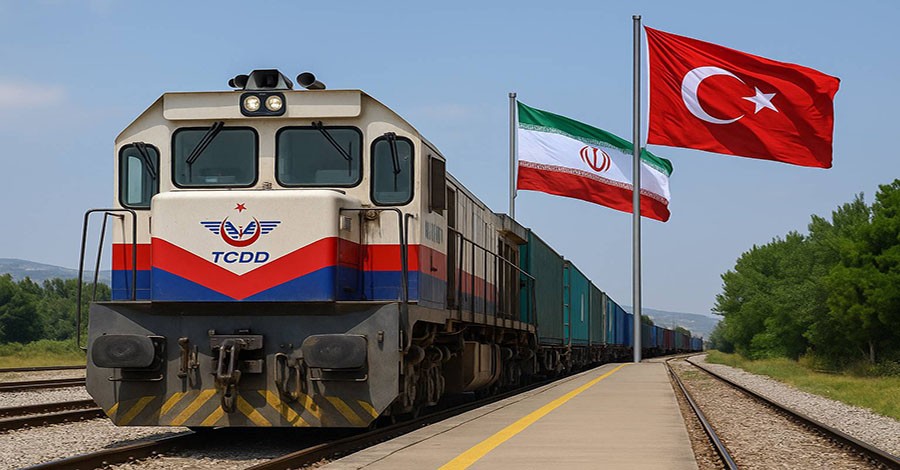
Iran and Turkey are building a new USD ۱.۶ billion railway corridorIran and Turkey have taken a major step towards strengthening railway corridors between Asia and Europe by agreeing to build a new railway line between Marand and Cheshmeh Soraya, up to the Turkish border in the Aralık area.
The announcement was made in Tehran during a joint press conference held by Iranian Foreign Minister Abbas Araghchi and his Turkish counterpart Hakan Fidan, following a round of talks focused on economic cooperation, infrastructure, and facilitating cross-border investment.
According to the two officials, the two governments have agreed “to start work, as a matter of priority, on connecting the two countries’ railways at the border,” marking the beginning of a strategic trade corridor that will reshape the region’s logistics architecture.
An essential link on the modern Silk RoadThe new Marand–Cheshmeh Soraya line is part of Iran’s strategy to transform the southern Silk Road into a “complete rail corridor” capable of ensuring the continuity of freight transport between China and Europe without interruption.
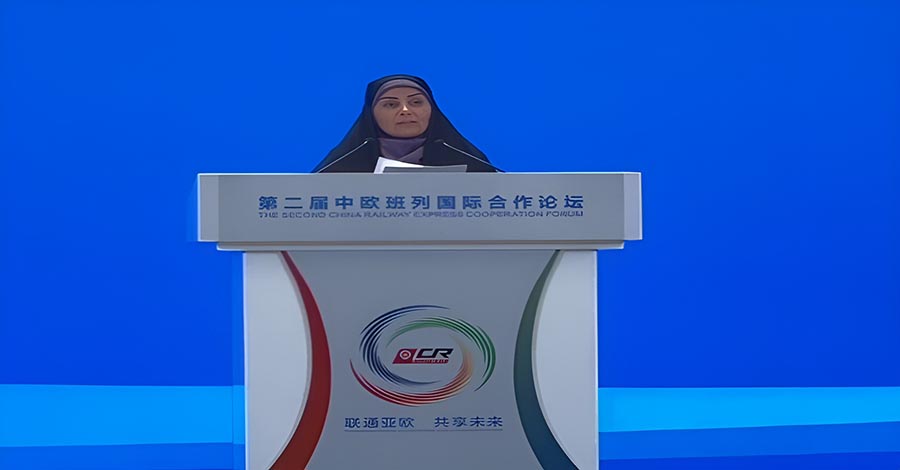
Iranian Transport Minister Farzaneh Sadegh recently emphasized that the infrastructure will enable “fast and inexpensive transport of all types of goods, with minimal stops,” which could fundamentally change Iran’s role in Eurasian transit networks.
The Silk Road, a millennial trade network that connected East Asia with the Middle East and Europe, returned to the center of geopolitical strategies with the launch of China’s Belt and Road Initiative in ۲۰۱۳.
Although Iran has cultivated close political relations with Beijing, international sanctions and a difficult investment climate have meant that the country has been partially bypassed by some of the major projects in the Chinese program.
Therefore, developing new ties with Turkey—an economy integrated with Europe, with direct access to the Mediterranean and Black Seas and with its own ambitions as a Eurasian hub—represents a pragmatic way for Tehran to consolidate its role in the East-West corridors.
For Ankara, the project ensures the continuity of logistics routes that strengthen Turkey’s position as an interconnection point between Central Asia, the Middle East, and the European Union.
۲۰۰ km of strategic infrastructure with a broad regional impactThe project, estimated at $۱.۶ billion, involves the construction of a completely new line in an area with complex terrain, with the aim of closing the last missing segment that prevents a constant rail flow between the two countries. The route will facilitate both the transport of containers from Asia and regional exports.
Currently, rail transport between Iran and Turkey is limited by fragmented infrastructure and cumbersome border procedures. The new works will remove these bottlenecks, and Minister Araghchi confirmed that “both sides have emphasized the need to remove barriers to trade and investment,” assuring that work will begin “as soon as possible.”
First freight flows confirm the corridor’s potentialSigns that the rail link between Iran and Turkey is intensifying were already apparent before the project was launched. In mid-November, Iran sent its first export train carrying cement clinker to Turkey, departing from Hashtgerd station, located near the Abyek cement plant.
The train, consisting of ۲۷ cars and loaded with ۱,۵۰۰ tons of cargo, marks the beginning of a new rail trade flow, initially developed as a pilot project. If transit performance, border procedures, and the tariff framework prove effective, officials estimate that the volume will increase to approximately ۲۰,۰۰۰ tons per month.
The operation could generate revenues of around €۲,۰۰۰ and will contribute to the growth of export rail transport on the Iranian network, particularly on the Tehran Railway which is seeking to expand its international connections.
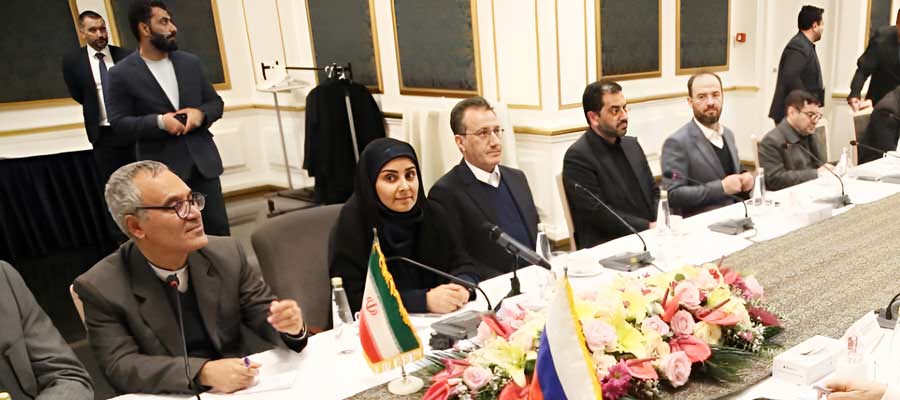
Iran-Pakistan-Turkey trilateral cooperation and the relaunch of the container trainAnother element demonstrating the consolidation of Eurasian corridors is the resumption in December of the Iran–Pakistan–Turkey container train service. The decision was agreed during meetings between Iranian Transport Minister Farzaneh Sadegh and Pakistani ministers of trade, communications, and railways.
The authorities of the two countries agreed to develop a joint action plan for railway cooperation, modernize the Quetta–Taftan line, and create a coordinated mechanism for implementing bilateral projects. At the same time, measures to stimulate direct trade and operationalize older economic agreements were discussed.
Pakistan recently introduced an executive order to promote barter trade with Iran, following consultations with the business community in both countries. In addition, a major economic conference, attended by over ۱۵۰ Iranian and Pakistani companies and representatives from ۱۱ countries, highlighted the high level of interest in developing integrated regional logistics chains.
Minister Sadegh stressed that Iran and Pakistan have the capacity to become an “eastern bridge” connecting China with Europe, using both existing rail routes and ports in the Indian Ocean and the Persian Gulf.
Iran strengthens its role in Eurasian corridors
Through the aforementioned projects, Iran is seeking to strengthen its role as a rail hub between Central Asia, the Caucasus, the Persian Gulf, and Europe—a strategy accelerated by economic sanctions that have reduced the country’s access to foreign direct investment.
The East-West (through Turkey) and North-South (India-Iran-Russia) corridors are the main pillars of this approach. Connecting the new lines to existing networks creates the conditions for a competitive rail system capable of becoming a viable alternative to congested or geopolitically vulnerable sea routes.
For Turkey, the project is part of a broader strategy to position itself as a Eurasian logistics hub, integrating its Mediterranean ports, motorway network, and modernized rail infrastructure with trade flows in the Asia-Pacific region.
A new chapter for Asia-Europe rail connectivity
The Iran-Turkey agreement on the construction of the Marand-Cheshmeh Soraya railway line, the dispatch of the first freight trains on the Iran-Turkey route, and the relaunch of trilateral cooperation between Iran, Pakistan, and Turkey clearly show that the region is entering a new phase of rail integration.
The projects strengthen a vital East–West corridor, providing an alternative to maritime routes and a solution for increasing logistical resilience in Eurasia.
Once completed, the new ۲۰۰-kilometer section will fill one of the missing links in China–Europe rail transport, amplifying Turkey’s role as a regional hub and repositioning Iran in the economic architecture of the modern Silk Road.
In a volatile geopolitical context, the USD ۱.۶ billion investment and increased rail traffic confirm that rail is once again becoming a major strategic tool for connectivity between Asia and Europe.
If implementation proceeds according to schedule, the first trains could run on the new corridor in early ۲۰۲۹ or ۲۰۳۰, opening up a competitive route for Euro-Asian freight flows.